
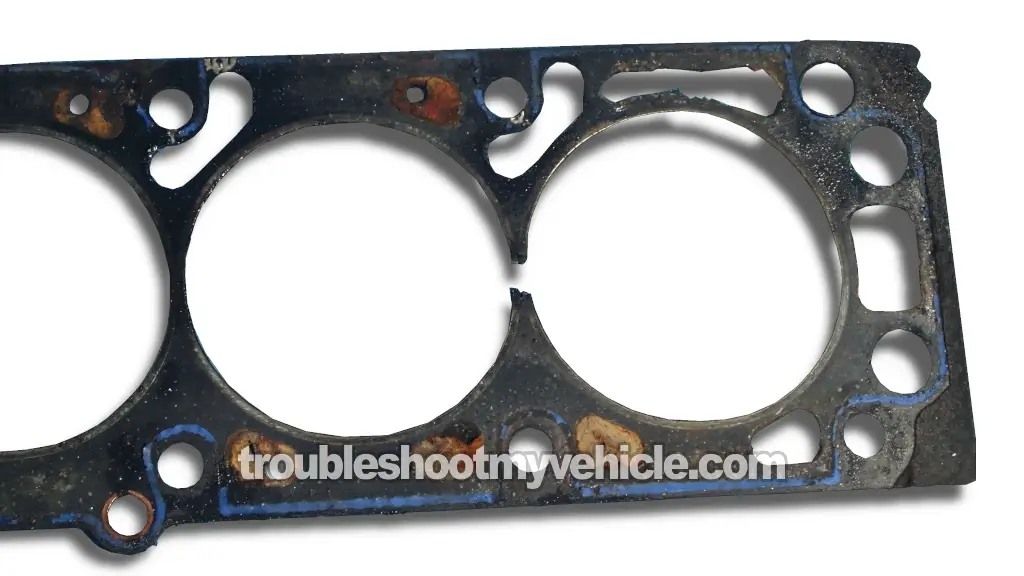
There are 4 ways to check if a head gasket is blown. You can do 2 of them without using any tools.
In this tutorial, I'm gonna show you how to do all 4 tests. So if you suspect you've got a blown head gasket on your hands, your results will help you confirm whether there's a head gasket issue or not.
Contents of this tutorial:
ES  You can find this tutorial in Spanish here: Cómo Probar Los Empaques De Cabeza (1989-2003 3.9L V6 Dodge Ram Van) (at: autotecnico-online.com).
APPLIES TO: This tutorial applies to the following vehicles:
- 3.9L V6 Dodge Ram B150 Van: 1989, 1990, 1991, 1992, 1993, 1994.
- 3.9L V6 Dodge Ram B250 Van: 1989, 1990, 1991, 1992, 1993, 1994.
- 3.9L V6 Dodge Ram B1500 Van: 1995, 1996, 1997, 1998, 1999, 2000, 2001, 2002, 2003.
- 3.9L V6 Dodge Ram B2500 Van: 1995, 1996, 1997, 1998, 1999, 2000, 2001, 2002, 2003.
Symptoms Of A Blown Head Gasket
A blown head gasket usually happens because the engine overheated. The most common causes are:
- Fan clutch failure: The fan clutch is worn out and can't pull enough air across the radiator to cool the engine like it should.
- Coolant loss: The engine ran without coolant due to a leak somewhere in the cooling system.
- Thermostat failure: The thermostat got stuck closed. Since it stayed closed, the hot coolant couldn't circulate between the radiator and the engine to cool things down.
When one or both head gaskets fail, you'll usually see:
- Overheating: The temp gauge hits the max, the warning light comes on, and you might see steam coming from under the hood.
- Coolant mixing with oil: You'll spot a milky goop in the oil or radiator — that's a solid giveaway of a head gasket failure.
- White smoke from the exhaust: Coolant is leaking into the cylinders and burning along with the fuel.
- Engine turns over but won't start: The head gasket failure causes a loss of compression in several side-by-side cylinders, which keeps the engine from starting.
- No compression in two neighboring cylinders: A sure sign the head gasket is blown between them.
- Coolant gets pushed into the reservoir: You'll see bubbles in the overflow tank while idling or right after shutting the engine off.
- Coolant keeps disappearing with no visible leak: You keep having to add coolant because the level drops, but you don't see any puddles.
- Engine performance issues: The engine runs rough at idle or misfires. You'll also notice a big drop in power from compression loss.
Depending on how bad the damage is (whether it's one or both head gaskets) you might not see all these symptoms at once. But if any of them sound familiar, it's a good idea to run one or more of the head gasket tests I'm about to show you, so you can be sure what's going on.
TEST 1: Oil The Color Of Coffee With Too Much Creamer
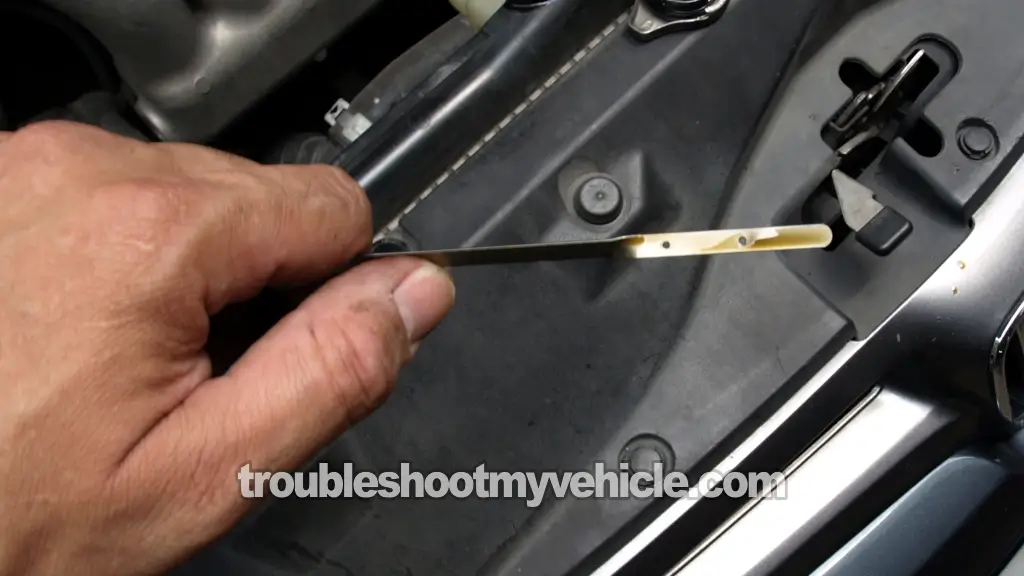
Most of the time, when one or both head gaskets fail in your Dodge Ram van, the engine oil ends up mixing with coolant.
So for the first test, we're gonna take a look at the oil on the dipstick. Specifically, we'll be checking its color and texture.
If the oil looks like coffee with way too much creamer, that's a big red flag. It means one or both head gaskets on your 3.9L V6 Dodge Ram van are shot.
Here's what you need to do:
- 1
Pop the hood open.
- 2
Pull out the dipstick from the engine.
- 3
Look at the oil's color and thickness.
- 4
You'll see one of two things:
1.) The oil looks off-white and creamy.
2.) The oil looks normal —both in color and viscosity.
Now let's figure out what your result means:
CASE 1: The oil looks like coffee with too much creamer. That's a clear sign that one or both head gaskets have failed.
CASE 2: The oil looks normal. That's what you wanna see. Everything's good so far.
Next, we'll check if any exhaust or compression gases are making their way into the cooling system. Head over to: TEST 2: Exhaust Gases Shooting Out Of The Radiator.
TEST 2: Exhaust Gases Shooting Out Of The Radiator
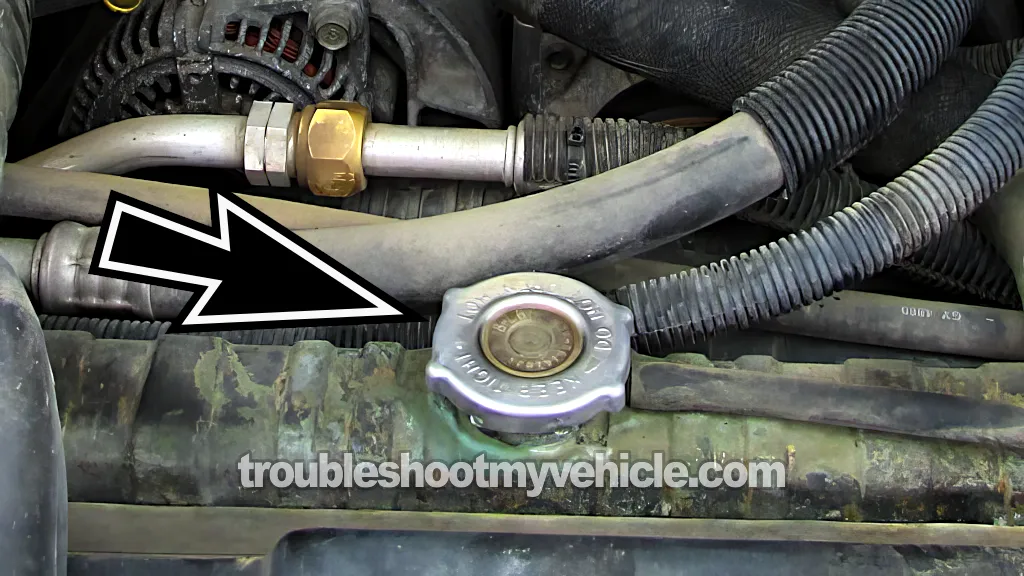
For this test, you're gonna crank the engine while the radiator cap's off.
If coolant shoots out of the radiator while the engine's cranking, that means one or both head gaskets are blown.
CAUTION: Never take off the radiator cap when the engine's hot! If your Dodge van's been running, wait until it cools all the way down before removing that cap.
Here's how to do it:
- 1
Take off the radiator cap.
If the radiator's coolant level is low, go ahead and top it off with water. - 2
Ask a helper to crank the engine while you stand back from the open radiator.
- 3
You'll get one of these two results:
1.) Coolant or water will shoot up and out of the radiator.
2.) The coolant remains undisturbed. Cranking the engine doesn't affect it.
Alright, now that the test's done, here's what your results mean:
CASE 1: Coolant shot out or bubbled up from the radiator. That confirms you've got a blown head gasket. Combustion gases are leaking into the cooling system. No need to do more tests.
CASE 2: Coolant didn't bubble or shoot out. That's the result you want. Up to this point, everything's looking normal.
If your 3.9L V6 Dodge van runs but misfires or idles really rough, go to: TEST 3: Cylinder Compression Test.
If your van starts overheating within minutes of starting it for no clear reason, go to: TEST 4: Using A Chemical Block Tester (Combustion Leak Tester).
TEST 3: Cylinder Compression Test
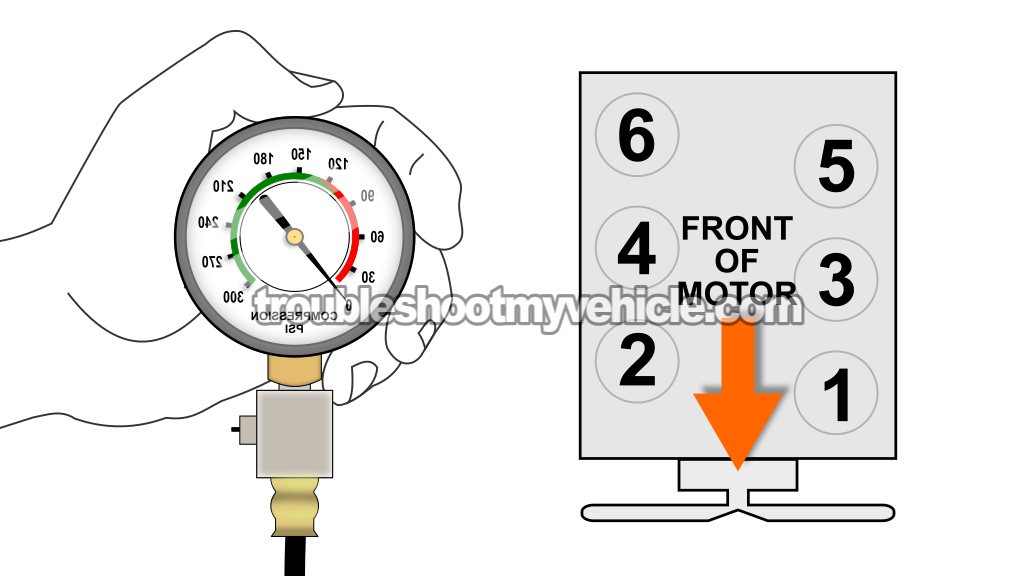
Sometimes, the head gasket burns out right between two cylinders that sit next to each other (you can see what that looks like in the image at the beginning of this tutorial).
When that happens, the engine usually starts up but runs rough or misfires badly.
The best way to pinpoint this kind of head gasket failure is by doing a compression test.
NOTE: The engine compression is explained in more detail (and how to interpret its results) in this tutorial: How To Test The Engine Compression (1989-2003 3.9L V6 Dodge Ram Van).
Here's how you do it:
- 1
Disable the ignition system.
Just unplug the ignition coil's 2-wire connector. - 2
Disconnect all the spark plug wires from their spark plugs.
- 3
Remove all the spark plugs.
- 4
Screw in the compression tester by hand into the first spark plug hole you wanna test.
NOTE: Don't use any tools to tighten it. Just hand-tighten it. - 5
Have your helper crank the engine while you watch the gauge.
- 6
Once the needle stops moving, tell your helper to stop cranking.
- 7
Write down the PSI reading and the cylinder number. Use the diagram above if you're not sure which cylinder is which.
- 8
Remove the tester and repeat the steps for the other cylinders.
Now let's break down what the results mean:
CASE 1: All cylinders showed normal compression. That's the result you want and it means the head gaskets are not burned between two neighboring cylinders.
If you still think there might be a blown gasket, go to: TEST 4: Using A Chemical Block Tester (Combustion Leak Tester).
CASE 2: Two side-by-side cylinders had 0 PSI. That tells you the head gasket's burned right between those two. It'll need to be replaced (along with the other one).
TEST 4: Using A Chemical Block Tester (Combustion Leak Tester)
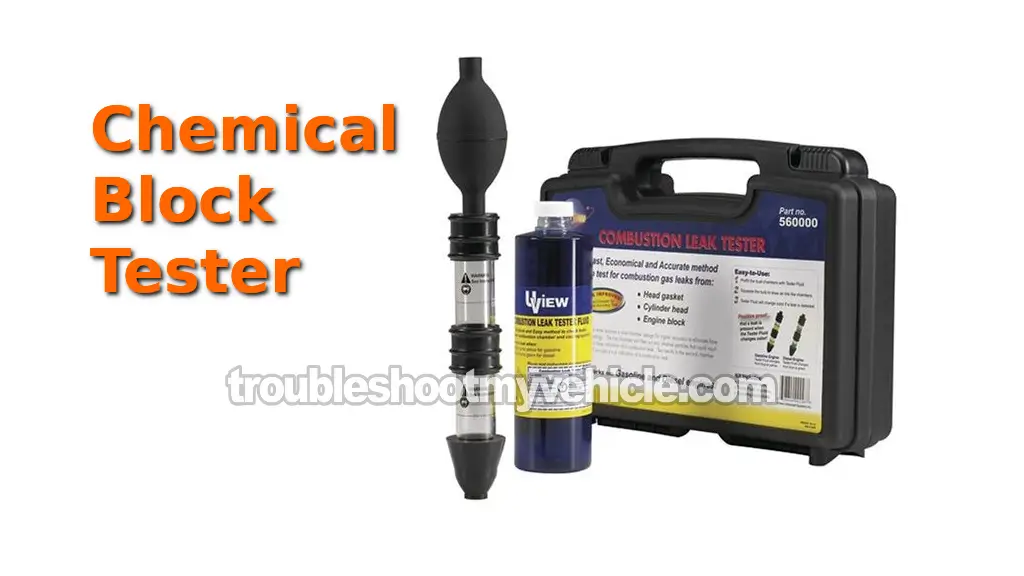
A blown head gasket can make the engine overheat just minutes after starting, but you might not see any of the signs the first 3 tests look for.
The only real way to know if a blown head gasket is causing the problem in this case is by doing a block test.
A block test (also called a combustion leak test) checks if exhaust gases are leaking into the cooling system —and honestly, it's the most solid way to tell if the gasket is blown when the other tests don't give you a clear answer.
Here's how the test works:
- You fill the tester with a special blue liquid (see the photo above).
- Then you place the tester onto the radiator opening. You might need to drain some coolant first since the tool needs to pull in some of the air sitting inside the radiator.
- Start the engine and let it run.
- Squeeze the rubber bulb to pull air from the radiator through the tester's chambers. As the air bubbles up through the liquid, it reacts with the chemical.
- If the blue fluid turns yellow (on gasoline engines), that means combustion gases are leaking in —confirming a blown head gasket, a cracked block, or a cracked cylinder head.
- If the fluid stays blue, you're in the clear. No head gasket issues, no cracks in the cylinder head or engine block.
You can shop for a block tester here:


Disclosure: As an Amazon Associate, I earn from qualifying purchases. If my tutorials help you, using these links is an easy way to support the site at no extra cost to you. Thank you!
More 3.9L V6 Dodge Ram Van Tutorials
You can find a complete list of 'how to' tutorials and wiring diagrams for your 3.9L V6 Dodge Ram van in this index:
Here's a sample of the tutorials you'll find in the index:
- How To Test The Engine Compression (1989-2003 3.9L V6 Dodge Ram Van).
- How To Test The Fuel Pump (1992-2003 3.9L V6 Dodge Ram Van).
- How To Test The TPS (1997-2003 3.9L V6 Dodge Ram Van).
- Fuel Pump Circuit Wiring Diagram (2000-2003 3.9L V6 Dodge Ram Van).

If this info saved the day, buy me a beer!
